World Environment Day

Green Economy - Does it include you?

World Environment Day

Bollywood

100years of Indian Film Industry...

Bollywood

Rabindranath Tagore

A Versatile Genius..

Final Destination 5

Kevin Pietersen

A Modern Batsman bid adieu to International Limited Overs Cricket...

Necessitatibus saepe eveniet

Guru Arjan Dev Ji

A real Martyr...

Omnis dolor repellendus

World Anti Child Labor Day

Stop Child Labour...

Pomnis voluptas assumenda

International Day against Drug Abuse and Illicit Trafficking

Global Action for Healthy Communities without Drugs .

Harum quidem rerum
  • World Environment Day
  • Bollywood
  • Rabindranath Tagore
  • Necessitatibus saepe eveniet
  • Omnis dolor repellendus
  • Pomnis voluptas assumenda
  • Don 2
Showing posts with label Biography. Show all posts

Sunday, May 6, 2012

Rabindranath Tagore : A Versatile Genius

Rabindranath Tagore was a Poet, Writer, Novelist and Musician. Sri Tagore was born on May 07, 1861 in the city of Bengal – Kolkata. After completing his education at home, he went to England for higher education. But he could not complete his study there.
When he was 8 years old, he wrote a poem. He published his collection of poems at the age of 16 years. He wrote in his mother tongue Bangla but after translating his poem, he became popular in western side also. He wrote a thousand poems approximately. He wrote 8 books on short stories, play, 8 novels, essay on religion, education & social issues and other so many books. He wrote two thousand songs and composed many songs. From which one song became India’s National Anthem (Jana Gana Mana) and other became Bangladesh’s National Anthem (Amar Shonar). Jana Gana Mana has completed its 100years on December 27, 2011.  
Sri Tagore was famous in Bengal in earlier days. Nobody knows him outside the Bengal. In the year 1912, he published his collection of poems Gitanjali in English language. Firstly that made him popular in England and then he became a famous personality in the world. His writing presented the emotional picture of Indian Culture in west for the first time.
After 1 year, he got the biggest achievement and that was Nobel Prize in Literature. He was the first non – European who got that prize. Rabindranath Tagore was very close to Mahatma Gandhi but he was far away from the politics. He always spent the money, which he got from his writings & lectures, on the schools. A Famous writer Count Kesselring opened a School of Wisdom in 1920. Tagore was invited in its opening ceremony.  He participated in so many programs and festivals.
In the year 1915, Tagore was honored as Knighthood by the British Government which he returned to the British Government because of Jallianwala Bagh massacre and their policies against India. He was attached with Punjab also. He was very impressed by the writing of Gurus. He also wrote poems on Banda Singh Bahadur & Shaheed Bhai Taru Singh.
So His Literature and his music are the great treasures for us which we have to keep it safe.
Let us paying a tribute to him at by saluting him at his Birthday on 7 May..!

A Tribute to Rabindranath Tagore by me...
Rabindranath Tagore: A Mind Without Fear
Rabindranath Tagore : A Versatile Genius


Posted by Unknown 0 comments

Tuesday, April 17, 2012

Mika Singh : Bad Boy of The Bollywood

How does bagging a Film fare Award matter..!
How much of a deal is to work with the best music directors in the Industry..!
And how does it mean a lot to sing for A-list Actors..!
Minus everything that qualifies one as a talented playback singer; Mika is there and on the top...

Amrik Singh, real name of Mika Singh, born on June 10 in Durgapur, west Bengal. He brought up in Patna, Bihar along with his brother Daler Mehndi. His father, Ajmer Singh Chandan, is a trained classical Musician of the old school. His mother, Balbir Kaur, was also aware of Folk Music.
Ask any Dj or a party hopper how many times Tu Mera Hero is played; for that matter, the scene is not very different at weddings. “Fans tell me that the party begins with the song and ends with it. To a singer, this is the biggest compliment," says Mika, the voice behind the super hit track of the Movie Desi Boyzzz. The song is just the beginning of his list of 30 Hit Tracks in the last one year.

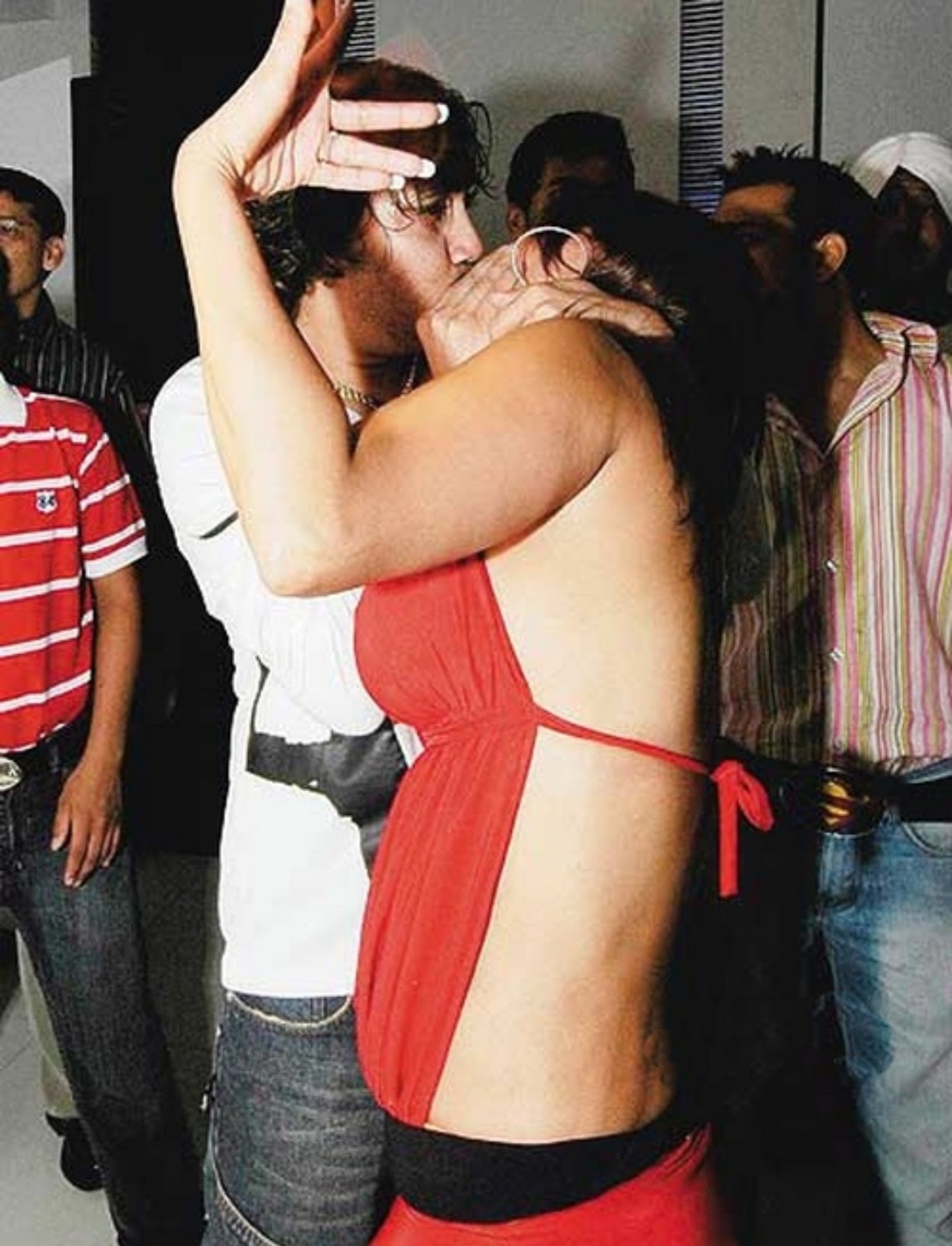
Mika does not mind bragging about his success story. Humility is not a word meant for him. Neither when it comes to his hit songs nor his passions. "I recently bought two camels because i just wanted to." He goes on, "I also bought an Island in Damdama Lake and a small forest near Delhi." He once felt the same for his small army of body guards... Remember when they bashed up Rakhi Sawant's Boyfriend after that Kiss incident. Rakhi Sawant was kissed by Mika when she went to his place to attend a party and wish him on his Birth Day in June 2006. "I don't have any now but i am happy that I triggered off this trend in Bollywood."

Mika set off another trend in the Industry that of Nasal Singing. While that's what people call it, he says that's his style, which was soon follwed by Himesh Reshammiya and Salim Sulaiman, "It's my style and if people have liked it then that's enough for me. Take the example of Kolaveri Di; people liked it even if music critics didn't." He also gets the credit for making Punjabi Singers venture into Bollywood and he is happy to quate the recent examples of Babbu Mann and Diljit Dosanjh.
Mika has participated in some reality shows called Iss Jungle Se Mujhe Bachao and Music Ka Maha Muqabala etc.

Mika is next working upon Ganpat version - 2. The first was superhit, which encouraged him to even write the second. "It is important to relise that none of my songs are the title numbers. Tu Mera Hero was the fourth track; Mauja Hi Mauja of Jab We Met was the second track and same in the case of Dhin-ka-Chika of Ready. My Songs eventually become bigger than the films." He hasn't worked for the big banners but something he resolves to do this year is sing for Amitabh Bachchan. Though there is nothing in the pipeline, he is sure that something will work out.
Minus any pretensions, while he loves to boast of what he does and what he owns, there’s something he doesn't readily talk about. Nudge him a bit; even then the details come through reluctantly. "I run an NGO in Delhi by the name of "Divine Touch", where 300 girls are given vocational training annually." And that is where it ends. He again hops back to his favorite topic - I, Me, Myself. "I might be the bad boy of Bollywood but i am not that bad. Controversies follow me but that is because I am Successful. All My Songs are a Hit..." Rest goes on and on....!


Dedicated a Portrait on his 35th Birthday to Bad Boy of the Bollywood


Posted by Unknown 2 comments

Dr. Bhim Rao Ambedkar : The Father Of Modern India

India is a vast country and many people of the world have invaded it such as the Muslims, British’s, Portuguese’s, French’s and Dutch people. The name of Dr. B. R. Ambedkar brings to our mind a social reformer. He belonged to the first ranking leaders of India like Mahatma Gandhi, Pt. Jawaharlal Nehru and Subhash Chandra Bose who fought for Independence of India. He had the distinction of getting higher education despite the many odds he had to face during the feudal Indian society. But he faced all the difficulties and rose to become a noted lawyer, a man of knowledge and wisdom. Dr. Ambedkar was not only the real father of nation but also the liberator of all oppressed people. No other icon can represent that cultural heritage in the modern period. He has been honored with Bharat Ratna – India’s highest civilian award.

Dr. Bhim Rao Ambedkaar was born on April 14, 1891 at Mohan in a poor family. He was the 14th and last child of Ramji Maloji Sakpal and Bhimabai. He was popularly known as Baba Saheb by his friends and followers. After graduating from Bombay, he began to serve the state of Baroda under the King of Baroda Shri Sivaji Rao Gaekwad. He did his job with a great sincerity and integrity. Later on, he went to USA for higher studies. He received a wide applause for his talent both in India and abroad.
Dr. Ambedkar always stood for equality, justice, liberty and fraternity. He wrote
“I like the religion that teaches us Liberty, Equality and Fraternity.”
He was called Indian Lincoln by the Zion’s Herald. He; a great Columbia University, Oxford educated scholarand 1st Law Minister of India after Independence; wrote the Indian Constitution. He created constitutional rights for all Indians that place most importantly the poor people equally among others. He fought for civil rights struggle for abolishing caste system and made the new India possible provided equality. He revived Buddhism in India. The Constituent Assembly of Independent India appointed a Drafting Committee with him as its Chairman to draft the Constitution of India. In February 1948, He presented the Draft Constitution before the people of India; it was adopted on November 26, 1949 with all its 356 Articles and 8 Schedules.
Since 1948, Ambedkar had been suffering from diabetes. He was bed-ridden from June to October in 1954 owing to clinical depression and failing eyesight. On May 24, 1956, on the occasion of Buddha Jayanti, he declared in Bombay, that he would adopt Buddhism in October. On 0ctober 14, 1956 he embraced Buddhism along with many of his followers. On December 6, 1956, Baba Saheb Dr. B.R. Ambedkar died peacefully in his sleep.
Really Baba Saheb Dr. B. R. Ambedkar was the real Father of Modern India.
A Portrait Of Baba Saheb is dedicated at his 121th Birthday...
Posted by Unknown 5 comments

Thursday, April 12, 2012

Charlie Chaplin : A Creative & Influential Personalities of the Silent-Film Era

Whenever we remind Charlie Chaplin, Character with Broad Pent, Tight Coat, Small Hat, Big Boots and Small Moustache comes in front of our eyes. He became a famous man in his very early age with his timing of Comedy. Many artists in every country of this world tried to copy him. In India or Bollywood, an example of his character is Raj Kapoor – Showman of Bollywood who performed many characters like Chaplin and got a lot of praise. ..
Charlie’s father’s name is Charles Chaplin and his mother’s name is Hena Hill who worked in British Music Hall as an artist. He was born on April 16, 1889. The very first bad incident in the life of Charlie was when his mother made a decision to take divorce from her husband and live her life separately with 3 years’ old Charlie. She tried to foster him by doing small work. One day in the year 1894 His mother, a victim of disease of throat, was doing her performance in the theater The Canteen; her neck had left her company. The condition the theater became terrible by the soldiers and the young boys. A 5 years’ old Charlie could not tolerate her insult. To control the conditions, he came on the stage with full of confidence and sang a composition of Jack Jones. All the people admired him at that stage and roaring sound of clapping welcomed him in the house of an Artist, Composer and a Comedian…
Charlie had never looked back after this huge success. He travelled his first tour of America with Friend Carno Trup in 1910. After two years, he introduced his art in front of American people and got huge amount of love & affection. Then he made his mind to live in America. In the year 1913, Mack Sanat, the owner of Kiston Studio, offered him to do in his movie. He became the heartbeat of million American people after getting huge success of 2nd film with the same company…
Charlie Chaplin, who was called a Mine of Intelligence, created United Artist Film Distribution Company with the partenership of D. W. Grifith, Duglus Farebanks and Mery Pickford and made movies as A Woman Of Paris (1925), The City Lights (1931), Modern Times (1921) and broke previous record of his success. In the movie Modern Times, He was music composer too and all the others are silent movies…
In the year 1927, in spite of talkative movies in Hollywood, he directed first talkative movie The Great Dictator which was totally against the Hitler and his Nazism. In the year 1942, he criticized the approachability of America in Second World War which made him a Controversial person…
In 1952, when he went to London to promote his movie Lime Time, he was restricted to come back by American Government and he was become homeless. A King in New York was his one of his movie which stirred the blood of political conditions of America. This movie sealed his way to return America and he started living in vevey (Switzerland). He had 9 girlfriends, 3 wives and 11 children. When he was 54 years’ old, he married to Ona Neel who was smaller thrice to him and had 8 children from her. In the end, he died on December 25, 1977 when he was 88 years’ old…
Really Charlie Chaplin was one of the most Creative and Influential Personalities of the Silent-Film Era…
Posted by Unknown 0 comments

Wednesday, April 4, 2012

K. L. Saigal - First Superstar Of Indian Film Industry

Being a great singer as well as a great actor and then justify both of the acts, this can be done only by a stunning and remarkable personality. K. L. Saigal (Kundan Lal Saigal) was the owner of this type.  Hailed as Shehnshah-e-musical (emperor of Music) and acclaimed as the ghazal king, K. L. Saigal became a phenomenon in his own lifetime. Idolized for his distinctive style by the first generation of Bollywood Playback Singers. He is now the subject of study by the severals scholars. He was the first Superstar of the Indian Film Industry. Some very popular actors/actresses of Bollywood had stepped on the footsteps of his singing and acting and got the success…

Kundan Lal Saigal was born on April 04, 1904 at Jammu where his father Sri Amar Chand was a Tehsildar and his mother Kesar Bai was deeply religious lady and was very fond of Music. So he used to sing Bhajan, Kirtan and Shabad in his early childhood. Against his father’s wishes, Saigal used to continue his practice with the help of Ram Leela and contine to polish his art…
After completing his studies, he had tried so many things. He worked as a Time Keeper in Railway and Salesman of Remington Typewriter Compant. In Lahor with the help of his friend Meharchand Jain, he went to Calcutta and introduced himself to famous musician R.C. Boral who introduced him to the owner of “New Theaters”, B.N. Sarkar and got him a job at Rs.200/- per month…

At first he released a Punjabi Song under the Music direction of Harish Chandar Beli which was very praised and then his song Jhoola Jhulaao under India Gramophone Company created success all around…
Being an actor and singer, he became a Superstar of the Bollywood with his first Film Mohabbat Ke Aansu (1932) and then by doing Subah Ka Sitaara (1932), Chandidass (1933),  Dhoop Chhaon (1935), Devdas (1935), he was become the heartbeat of everyone’s heart. Including President, Street Singer, Zindagi, Bhagat Soordass, Tansen, Shahjahaan, and Parwaana, his popularity however skyrocketed with Devdas in which he played the doomed lover to perfection, a portrayal which would influence every actor playing a tragic role thereafter. Including the immortal Diya Jalao jagmag jagmag, Baag laga doon sajni, jab dil hi toot gaya, Kundan Lal Saigal performed in 36 films in his filmy career of 15 years and sang 185 songs from which two are Punjabi, two Tamil, thirty Begali, and 150 are in Hindi or Urdu language with no formal training... 

Baalam Aan Baso (Devdas), Ik Bangla Bane Niyaara (President), So ja Rajkumari (Zindagi), Gam Diye Mustkil and Jab Dil hi Toot Gya (Shahjajan) are some of the songs which are still listening and liking by everyone with heart. Mohammad Rafi, Mukesh, Kishore Kumar, Talit Ajiz and Lata Mangeskar also admitted his Singing. Father of his son Madan Mohan, daughters Beena (Born 1941) & Neena (Born 1937), husband of Asha Rani (whom he married in 1935) and the king of every heart, K.S. Saigal  in his ancestral city of Jalandhar  on 18 January, 1947. Parwana (1947) was his last film, released after his death, in which he sang under the baton of Khawaja Khurshid Anwar.
Really he was the first Superstar of Indian Film Industry….

A Portrait of K. l. Saigal made by me...
Ist Superstar of Indian Film Industry     
Posted by Unknown 0 comments

Friday, March 9, 2012

"INQLAAB ZINDABAAD" - Shaheed Bhagat Singh

Inqlaab Zindabaad..!
Even today these words evoke Patriotic Feelings and a Spirit of Nationalism in the heart of every Indian…
Bhagat Singh, an Indian freedom fighter, is often referred to as Shaheed Bhagat Singh, the word Shaheed meaning "Martyr" in a number of Indian languages. He was the clean fighter who faced his enemy in the open field.
 
Bhagat Singh was born on Sept. 28, 1907 into a Sandhu Jatt family to Sardar Kishan Singh and Vidyavati in Banga village in the Lyallpur district of Punjab. He came from a patriotic Jatt Sikh family who had participated in movements supporting the independence of India.
As a teenager, He became an Anarchist and had studied European revolutionary movements. His father had enrolled him in Dayanand Anglo Vedic High School, an Arya institution.

In 1919, at the age of 12, Bhagat Singh visited the site of the Jallianwala Bagh massacre, where non-violent people gathered at a public meeting were fired upon without warning, killing hundreds.

At age 13, He began to follow Mahatama Gandhi's Non-Cooperation Movement. In support to this movement, he burned his government-school books and British-imported clothing. Following Gandhi’s withdrawal of the movement after the violent murders of policemen by villagers from Chauri Chaura, Uttar Pradesh, he felt resentful and discontent with Gandhiji's nonviolence action. He joined the Young Revolutionary Movement and began advocating a violent movement against the British.

At the age of 14, he welcomed in his village, protestors against the Gurudwara Nankana Sahib firing of 20 February 1921 which killed a large number of unarmed protesters. He studied at the National College in Lahore where he came into contact with other revolutionaries such as Bhagwati Charan, Sukhdev etc.

At the age of 16, Bhagat Singh was completely dedicated to the cause of national liberation.
In 1924, Bhagat Singh was pressurised to get married. Unable to convince his parents of his determination not to marry, Bhagat Singh left his house in Lahore, reached Kanpur and became a member of the organization Naujawan Bharat Sabha. In the note left behind for his father, Bhagat Singh said,
“My life has been dedicated to the noblest cause, that of the freedom of the country. Therefore there is no rest or worldly desire that can lure me now...”
 
In 1928 he came into contact with another famous revolutionary Chandrasekhar Azad. The two combined to form the 'Hindustan Samajvadi Prajatantra Sangha'. In the same year, the British government of India appointed the Simon Commission to enquire into the possibility of granting India the chance to rule itself. This Commission had no Indian representative made it the focus of popular attack in Lahore. Lajpat Rai, the head of a demonstration, was asking the Simon Commission to go back to England. The police in retaliation lathicharged the crowd and Lajpat Rai enfeebled by age, died subsequently. To avenge Lajpat Rai's death, Bhagat Singh and his friends, Sukh Dev and Raj Guru decided to kill the British official responsible for the killing, Deputy Inspector General Scott. But they accidently shot Assistant Superintendent Saunders instead, and then went underground. After killing Saunders, the group escaped to Howrah with the help of Durga Devi Vohra, their friend Bhagwati Charan Vohra's wife and Child.
Later, on April 8, 1929, Bhagat Singh threw a bomb in the Central Legislative Assembly and thereafter courted arrest. Bhagat Singh's trial began on May 7th and in the statement made in court on 6th June,
Bhagat Singh said:
“We dropped the bomb on the floor of the Assembly Chamber to register our protest on behalf of those who had no other means left to give expression to their heart-rending agony. Our sole purpose was to make the deaf hear and to give the heedless a timely warning... from under the seeming stillness of the sea of humanity, a veritable storm is about to break out...”
On the 15th of June he launched a hunger strike for jail reforms. Jawaharlal Nehru met Singh and the other strikers in Mianwali jail. After the meeting, he stated:
“I was very much pained to see the distress of the Heroes. They have staked their lives in this struggle. I am quite hopeful that their sacrifice would be crowned with Success...”
In the Prison, Bhagat Singh used to write in a diary. He wrote many notes, pamphlet.
The trial of the Lahore Conspiracy Case started on 10th July, 1929 and ended on the 7th of October, 1930 with a death sentence for Bhagat Singh for his subversive activities. Bhagat Singh, Sukhdev and Rajguru were hanged on the 23rd of March, 1931. In the 29 March 1931 issue of Young India, Gandhi wrote:
"Bhagat Singh and his two associates have been hanged. The Congress made many attempts to save their lives and the Government entertained many hopes of it, but all has been in a vain.
Bhagat Singh did not wish to live. He refused to apologize, or even file an appeal. Bhagat Singh was not a devotee of non-violence, but he did not subscribe to the religion of violence. He took to violence due to helplessness and to defend his homeland”


The legendary son of India became Shaheed (Martyr) at a tender age of 23. But his famous war cry of “Inquilab Zindabad” lives on..! "Nawashehar" of Punjab is renamed "Shaheed Bhagat Singh Nagar" in the memory of this Shaheed...


We have four real Pictures of Bhagat Singh. And these are...
Shaheed-E-Aazam Bhagat Singh


Posted by Unknown 0 comments
Related Posts Plugin for WordPress, Blogger...